
The money is largely in place. The harder question is who delivers it.
For years, the dominant question in UK infrastructure has been how to secure the investment. Increasingly, a different question is emerging.
Who is going to build it?
Consider what is happening at once. Thames Water has shortlisted three international joint ventures, drawing on eight major contractors, for the £5.7 billion White Horse main works contract. The Environment Agency is supporting more than 600 flood schemes in 2026/27 and has tendered its £6.6 billion Collaborative Delivery Framework 2, with appointments due by the end of the year. Ofwat's Major Water Infrastructure Programme covers more than 30 projects. And AMP8 is a £104 billion programme.
Each is substantial. Collectively, they draw on the same pool of engineers, planners, ecologists, commercial managers, digital specialists and supply chain.
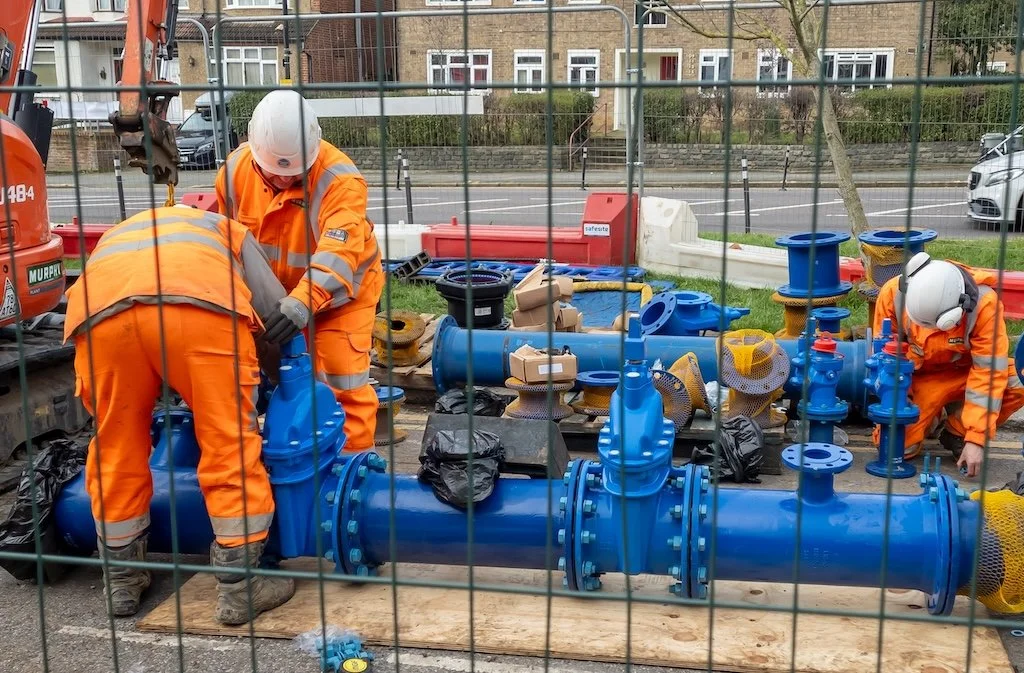
image: Shutterstock. The policy commitments and funding decisions are largely in place. The next challenge is ensuring the people, capacity and productivity exist to deliver them.
There are signs the pressure is already building. A report from specialist recruiter Murray McIntosh, "AMP8: Year 0 - A Slow Start with High Stakes", argues that capital programmes paused during the CMA process and that some obligation dates once assumed to be 2030 are now slipping to 2032 or 2033. It expects the familiar pattern of under-mobilisation in the early years, followed by a "bow wave" of work in years three and four that "many fear is physically undeliverable".
Professor Jacob Tompkins OBE, director of the European Water Technology Accelerator, calls it "the slowest start to an AMP I have seen since privatisation", adding: "Generally, there is a lack of internal staff, and the supply chain isn't yet geared up to fill the gap."
The report also points to companies planning headcount in isolation, a growing reliance on contract hiring, and skilled engineers moving into nuclear and energy. White Horse alone is expected to support more than 1,000 jobs.
It is an industry voice rather than a regulator, but the message is consistent with what regulators are now acting on. Ofwat has held roundtables with domestic and international contractors, and has since published updated procurement guidance, standard-form agreements and a commercial principles charter to build confidence in the major projects pipeline. Its new penalties guidance rewards early, honest communication about delays.
The point is not that capacity is lacking. It is that nobody has yet joined up the picture. Each programme plans its own resourcing, and the pressure points only become visible when they are added together.
That is a different kind of challenge from funding. It needs shared intelligence on demand, a credible pipeline that contractors and investors can plan against, and a sector that people want to join and stay in, with productivity and digital delivery doing more of the work.
Funding remains essential. But in the coming decade, capability may prove just as important.