
Thames Water's new Major Projects Framework is one of the clearest signals yet that AMP8's biggest capital schemes are moving from plan to delivery – and that long-term partnerships, not one-off contracts, are becoming the model.
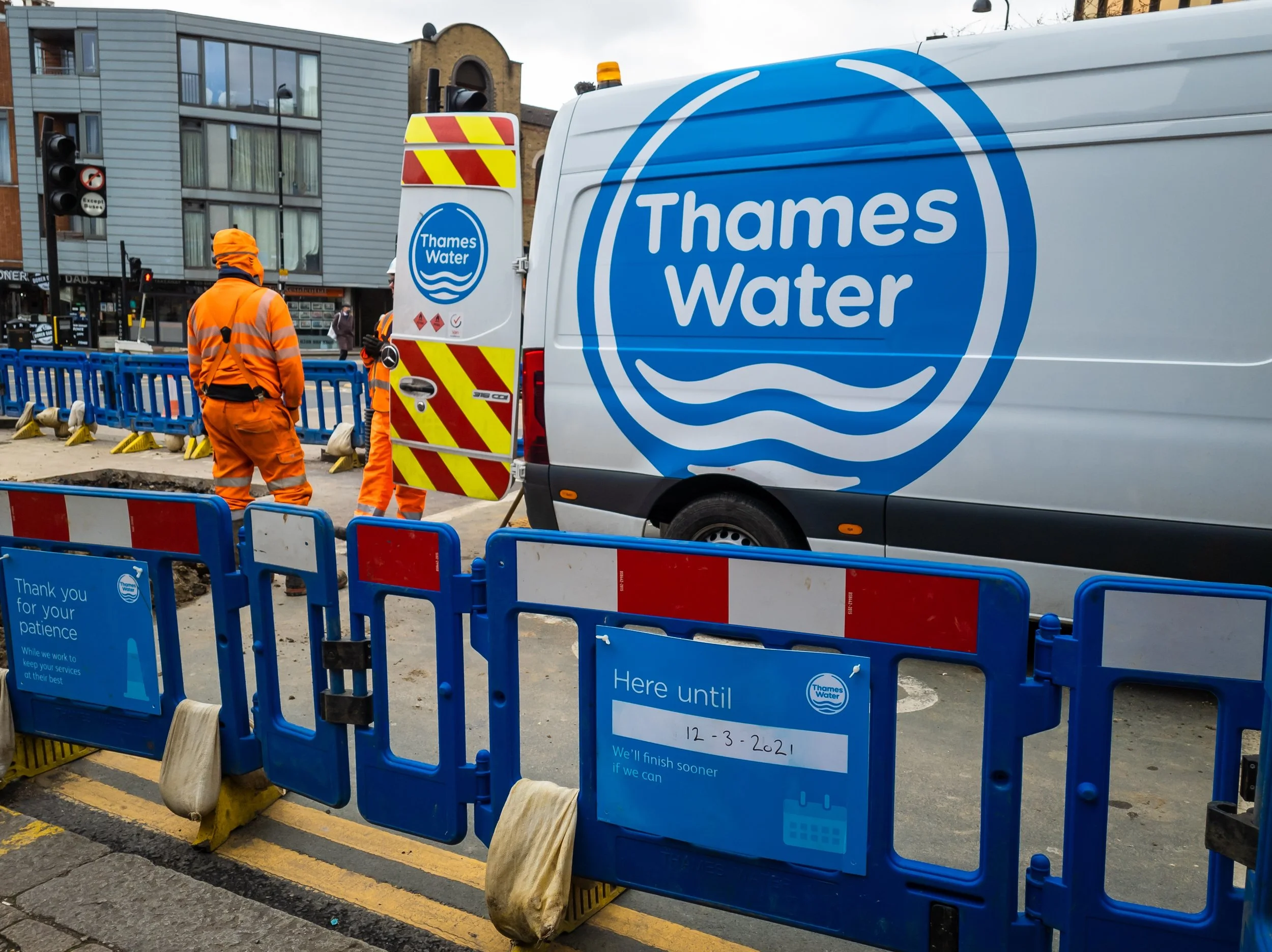
Thames Water's nine-team Major Projects Framework moves AMP8's biggest schemes towards delivery, and puts the long-term partnership model to the test.
Thames Water has named nine contractor teams, twelve companies in all, to its Major Projects Framework: the route through which it will let its largest water and wastewater schemes across London and the South East during AMP8, with provision to carry on into AMP9.
The contract award notice, published on Find a Tender on 23 October, puts the framework's estimated value at £4 billion excluding VAT. The initial term runs to 31 March 2030, with extensions possible to 31 March 2035.
The appointed teams are:
BAM Nuttall
Barhale
Costain
Ferrovial Construction, with Cadagua and Binnies
Galliford Try
J. Murphy & Sons
Kier Infrastructure and Overseas
Mott MacDonald Bentley
Taylor Woodrow, with Amentum
On the surface, this is a framework award. Look closer and three features stand out.
The first is the horizon. The opening wave of work, set out when market engagement began in July 2025, is worth £840 million: ten projects at nine sites. Seven are wastewater treatment works – Riverside, Beckton, Crossness, Didcot, Wantage, Bicester and Hogsmill – while Ashford and Hampton water treatment works are getting ultraviolet treatment schemes. The £4 billion is the headroom for everything that follows, out to 2035, within a wider investment programme Thames Water puts at more than £20 billion by 2030.
The second is the model. Thames Water pitched the framework as a way to cut repeated tendering and build long-term relationships with tier 1 contractors, with its major projects and programmes director Tim Horton promising "strong, lasting partnerships with suppliers". The evaluation backed that up. Tenders were weighted 60% quality and 40% price, and the heaviest technical theme, at 35%, was pre-construction and programme delivery. This is a client buying capability, not just rates.
The third is the market. The tender allowed for up to eight places; nine have been awarded, and Thames Water has not said why. International capacity is part of the mix, through Ferrovial's Spanish water treatment sister company Cadagua and US engineering group Amentum. And the same names keep appearing across programmes. Murphy is part of the BMV+ joint venture shortlisted for the £5.7 billion White Horse Reservoir main works, while Ferrovial has just secured a place, with MWH Treatment, on Anglian Water's £1.5 billion Major Projects Framework.
The timing matters too. Thames Water had planned to make the award decision in March 2026; it came seven months later, consistent with the slow start to AMP8 that recruiters and commentators have been warning about. And it lands against a backdrop of financial uncertainty. This week creditors approved an increase in Thames Water's emergency funding facility to £5.4 billion, which the company says extends its liquidity into autumn 2027 so it can keep delivering its capital programme while recapitalisation talks with the London & Valley Water consortium, Ofwat and other regulators continue. The framework's initial term runs well beyond that horizon.
That leaves an open question. A place on the framework is not a guarantee of volume. Work is called off project by project, with competition between framework members, and subject to project approvals. For the nine teams, the real value will depend on how quickly, and how predictably, the pipeline turns into live contracts.
This is the shift Confluence was set up to explore: from projects to programmes. A nine-team framework is a programme-shaped commitment. Whether it produces programme-shaped results – a steady pipeline, shared learning across sites, productivity that improves from one scheme to the next – is the question the whole sector is now asking of AMP8. It is one we will be putting to clients, contractors and investors at Confluence, Manchester Central, on 3 March 2027.
The supply chain is in place. Now the pipeline has to flow.