
Southern Water has this week stepped up its hearts and minds campaign to get customers used to drinking recycled water. The timing is no accident: the first of its four recycling schemes, which would store purified recycled water in the new Havant Thicket Reservoir, is now before the Planning Inspectorate. For the UK's water resilience programme, winning the public argument may prove as important as winning consent.
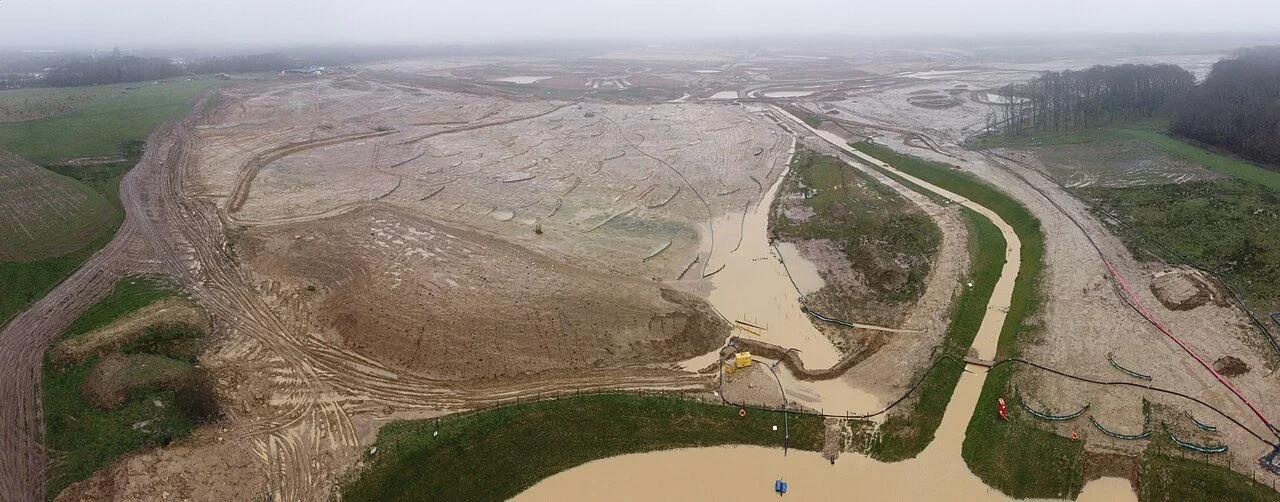
Southern Water has published a myths and facts guide to recycled drinking water as its Hampshire scheme, which would store recycled water in the new Havant Thicket Reservoir (pictured), enters examination. Tim Sheerman-Chase, CC BY 2.0, via Wikimedia Commons

Southern Water has published a myths and facts guide to water recycling, taking on public objections head-on. Its pitch is that recycling is a "drought-proof" source: one that keeps running whatever the weather, so less water needs to be taken from chalk streams and aquifers when nature needs it most. It is candid about the limits of its argument, too, opening with the admission that it does not expect everyone to support water recycling.
The guide tackles ten objections, from "there's plenty of water" to "the answer is just to build more reservoirs". Its key arguments are:
The need is real. In Hampshire alone, legally binding cuts to abstraction have left a shortfall of 166 million litres a day in an extreme drought, rising to around 200 million litres a day by 2050. Protecting the environment accounts for more than half the South East's projected shortfall.
The alternatives fall short. Of the other options it has explored, Southern says only desalination can produce comparable volumes without relying on rainfall, and it uses more energy. During reverse osmosis, recycling needs around a tenth of the energy desalination does, because treated wastewater holds far less solids than seawater.
It is proven and regulated. Recycled water is already part of the supply for 30 million people worldwide, and the Drinking Water Inspectorate says recycling schemes provide a safe source of drinking water. In England, purified recycled water must also pass through an "environmental buffer", such as a river or reservoir, before it is treated again for supply.
Leakage alone won't fix it. Southern says it now puts around 555 million litres a day into supply, against 730 million litres in 1989, and that even fixing every leak would not close the gap.
The guide also makes a point that matters well beyond Southern's region: reservoirs need a reliable, rainfall-independent source to fill them if they are to perform in an extreme drought. Recycling, it argues, is what makes a reservoir drought-proof.
The schemes behind the campaign
Southern says its four planned recycling projects could together produce up to 97.5 million litres a day.
The largest is the Hampshire Water Transfer and Water Recycling Project. It would build a water recycling plant off Harts Farm Way in Havant, turning highly treated wastewater into purified recycled water. That water would be pumped into Havant Thicket Reservoir, the first major new reservoir in England for more than 30 years, which Portsmouth Water is building with Southern Water funding. From there, a pipeline of around 40km would carry water to Southern's Otterbourne Water Supply Works near Winchester for final treatment. Reject water from the plant would be released to sea through the existing Eastney long sea outfall.
Integrating recycling has transformed Havant Thicket. In September, Ofwat proposed raising the reservoir's funding allowance to around £823 million, with capacity to supply up to 111 million litres a day, more than five times the original 21 million litres. It also pushed completion back to 2034, partly because of difficult ground conditions found during construction.
Southern submitted its Development Consent Order application in May. It was accepted for examination in June, and the Planning Inspectorate scheduled the preliminary meeting, the formal start of examination, for 11 November.
Alongside it, Southern is developing two drought schemes, at Littlehampton in West Sussex and Medway in Kent, formerly known as Ford and Aylesford. Together they are designed to deliver up to 33.4 million litres a day of purified recycled water during drought. They are being procured together under the Direct Procurement for Customers model, with a competitively appointed provider to finance, build and operate the plants.
Why it matters for Confluence
Water recycling sits at the heart of the Major Water Infrastructure Programme. Southern says seven English water companies are developing recycling projects. Thames Water's Teddington Direct River Abstraction, which we covered last week, relies on recycled water from Mogden to keep the river healthy below its intake.
The engineering is proven. The harder question is public consent. Southern's campaign meets concerted local opposition in Hampshire, where campaigners have questioned both the principle and the combined cost of the reservoir and recycling scheme. Trust is also a harder sell for a company that received a record £90 million fine for pollution offences in 2021. Its decision to argue the case directly with customers, rather than leave it to the planning process, is a recognition that the programme's legitimacy has to be earned in public.
That is a challenge for the whole sector, and one Confluence will tackle head-on: how the UK makes its water resilience programme one that society not only depends on but understands and supports. Join the conversation at Manchester Central on 3 March 2027.
The technology is ready. The test now is whether the public is.