
In September, the Environment Agency put the chance of severe drought at around 1%. A month later, it declared one. The first since 1976 is a warning about how fast climate risk is now arriving, and why resilience is becoming the main driver of infrastructure investment.
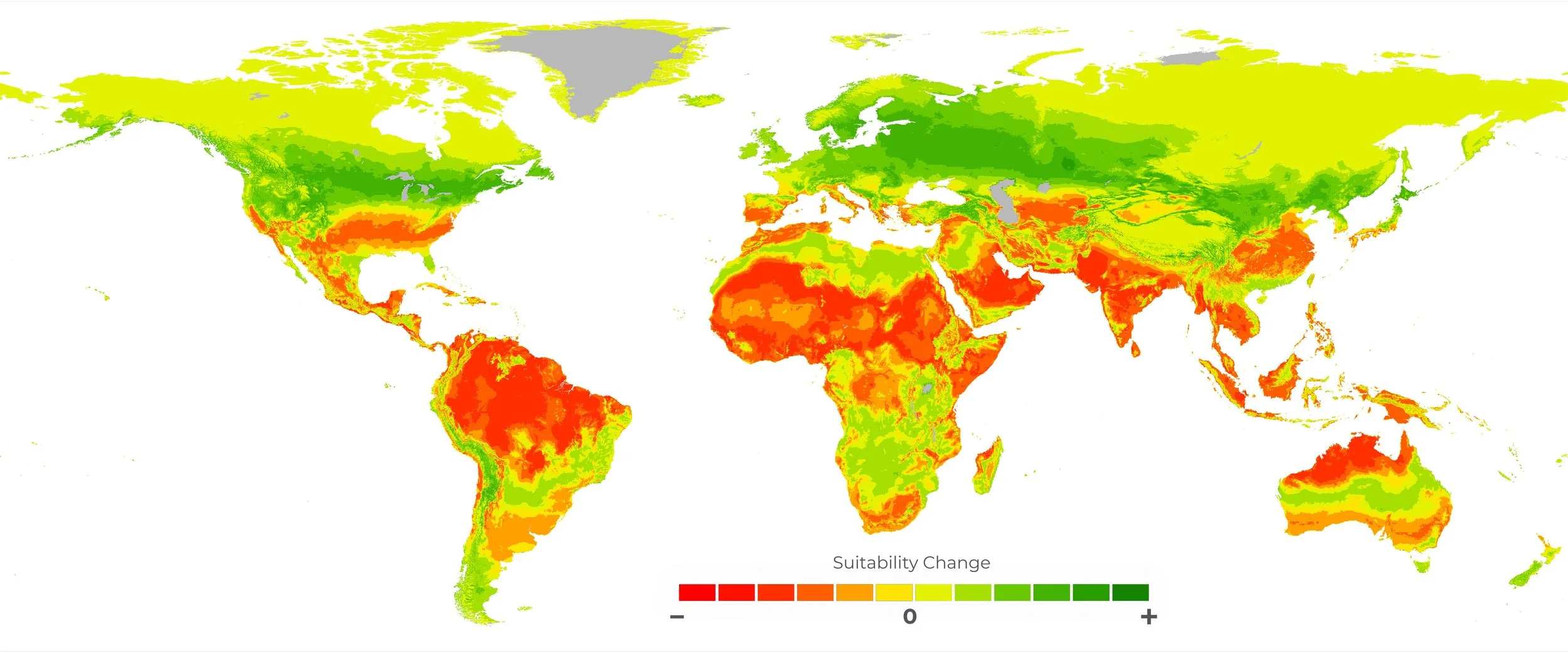
Globally, the optimal geographies for human habitation are shifting as temperatures rise; resilience, not growth, will be the biggest driver of infrastructure investment over the next five years, and extreme heat sits at the centre of it.
On 15 October, the Environment Agency declared severe drought, the highest drought status it can set, for parts of Cornwall, Devon, Dorset, Somerset, East Sussex and West Sussex. It followed the driest April to September in more than a century, after a summer of record temperatures. With the usual autumn rain yet to arrive, 82% of England remains in drought, up from 71% in August.
The declaration centres on the areas where supply is most at risk: homes and businesses served by Ardingly reservoir in West Sussex and Wimbleball reservoir in Somerset, with concerns too for several smaller South West Water reservoirs in south Devon and west Cornwall. To recover, some areas need 120% of typical rainfall over the next six months.
Severe drought is not a civil emergency, and it does not automatically bring new restrictions. What it does is change how the system behaves. Government and partners step up their response together, the EA increases scrutiny of company drought plans and speeds up permits, and, in agreement with government, the EA is using its regulatory discretion to prioritise public water supply in the affected areas.
The speed of the escalation is the real story. When the National Drought Group met in mid-September, the EA's modelling put the chance of severe drought in the coming months at around 1%, and noted that England had not seen one since 1976. Demand had risen by as much as 30% on the hottest days of a summer that brought the driest July and joint-hottest August on record. Four weeks later, the low-probability scenario had arrived.
Heat is now an investment driver
It is exactly the shift Dr Parag Khanna described when he spoke at Bentley's Year in Infrastructure awards in Singapore last month. His argument was that resilience, not growth, will be the biggest driver of infrastructure investment over the next five years, and that extreme heat sits at the centre of it.
Khanna's company, AlphaGeo, models what it calls a "climate discount": the economic cost of hazards such as heat stress on crop yields and on grid reliability. England's summer was a live demonstration. Farmers faced a very difficult harvest, rivers and wildlife came under severe strain, and now public water supply itself is at risk in parts of the South West and Sussex.
Two more of his points translate directly to UK water.
Adaptation is a local good. For 20 years, Khanna argued, the climate debate has been about mitigation. Adaptation has been neglected and under-capitalised, and unlike emissions cuts, what a country spends on its own resilience benefits that country alone. No one else will build England's reservoirs.
Resilience means removing single points of failure. Singapore, his prime example, has built four "national taps" – local catchment, imported water, recycling and desalination – under a 100-year plan. The places now in severe drought are defined by their dependence on individual reservoirs. Resilience, in Khanna's definition, is connecting supply and demand: moving water from where it is to where it needs to be.
The pipeline is the response
The UK has a plan for this. Government is working with companies and regulators on nine new reservoirs by 2050, alongside desalination and water transfers, through the Major Water Infrastructure Programme: more than £50 billion across 30-plus projects. The Planning and Infrastructure Act now lets non-water companies build reservoirs that automatically count as nationally significant infrastructure, to speed up approvals. Havant Thicket is under construction; White Horse has just shortlisted three international joint ventures for its £5.7 billion main works.
But the gap between drought and delivery is measured in decades. White Horse water is not expected until 2040. In the meantime, AMP8's leakage and demand programmes carry much of the load, and this week's joint regulator report showed several companies with marked increases in leakage last year.
There is a flood link, too. As the EA has pointed out, heavy autumn rain can bring flooding while doing little for supply, because floodwater arrives too fast and too dirty to store. Too much water and too little are the same problem seen from different ends, which is why flood and drought now share a government taskforce.
Why it matters for Confluence
Confluence was set up around one idea: that AMP8, the EA's flood programme and the Major Water Infrastructure Programme are a single resilience challenge, drawing on the same people, supply chain and investor confidence. This autumn has made that case more plainly than any conference could. Khanna's advice to boards was to watch what governments commit to over the next two to three years. In UK water, those commitments are already made. The question now is whether they can be delivered as a programme, at the pace the climate is setting.
That is the conversation we will be having at Confluence, Manchester Central, on 3 March 2027.
The drought will end when the rain comes. The need to build will not.