
Fifteen case studies published this week will form the evidence base for the Infrastructure Systems Review, a major study of how the UK can manage its infrastructure as a connected system rather than a collection of assets. Water is at the heart of it: six of the fifteen deal with reservoirs, rivers, catchments and flood risk, and their lessons speak directly to the sector's biggest programmes.
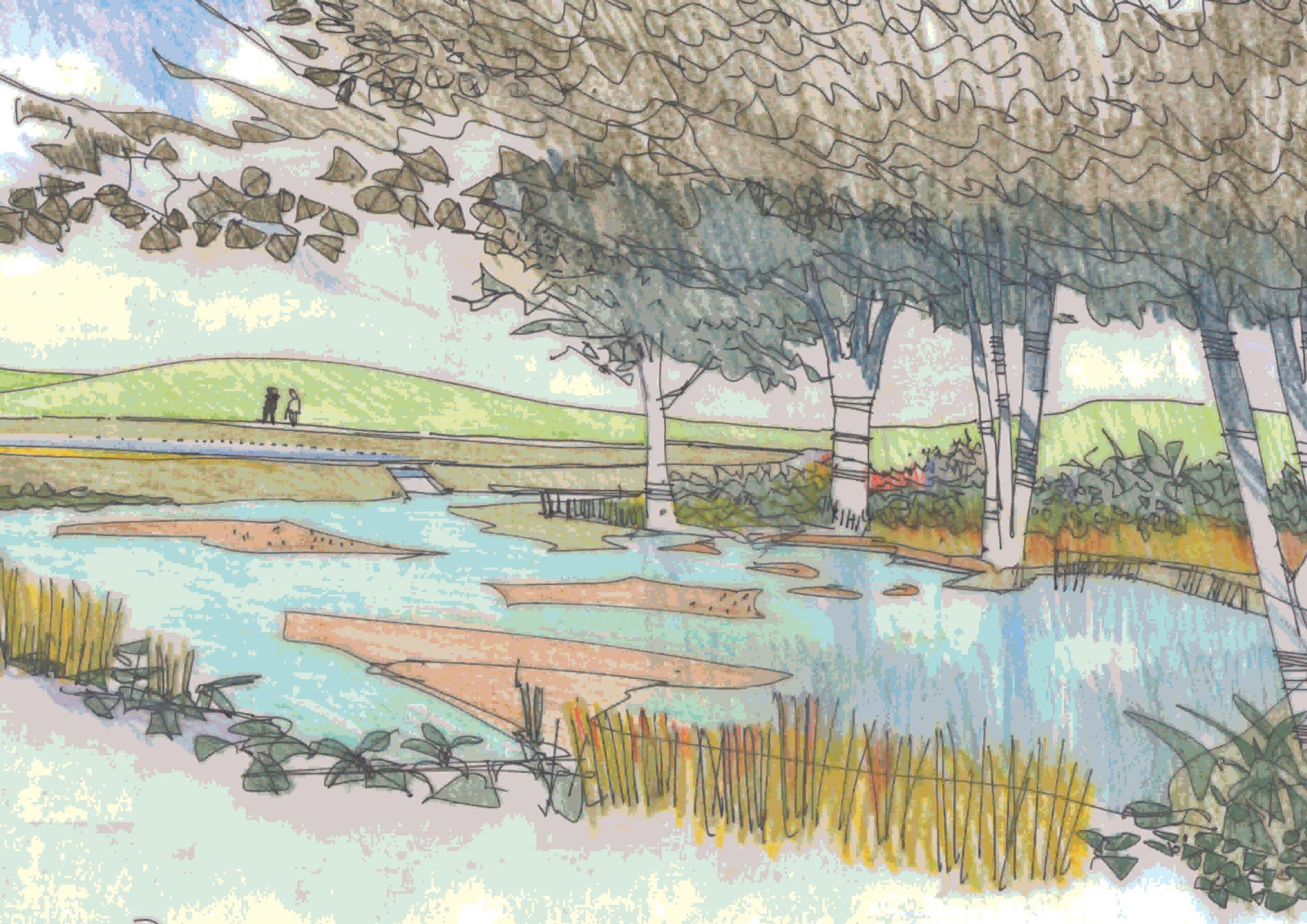
The Connecting the Culm project has worked with architectural illustrator, Richard Carman, to visualise the River Culm, its tributaries and the wider catchment
The evidence base for systems change: Fifteen case studies informing the Infrastructure Systems Review was launched on Wednesday. The review is co-sponsored by the Infrastructure Client Group (ICG), the National Infrastructure and Service Transformation Authority (NISTA) and the Green Construction Board. It follows the Connect to Change manifesto published in July 2025, and is due to report at the start of 2027.
Its aim is to understand how the built environment performs as a "system of systems", and how to get better outcomes and more value from investment by managing it that way. In his foreword, ICG chair Jason Tucker argues that the interconnections between infrastructure systems cannot be wished away: "A decision to ignore this is, paradoxically, still a decision."
The case studies range from Crossrail and the Transpennine Route Upgrade to a cross-sector digital twin and a historic bridge in Lincolnshire. They have been tested with ICG executive board members, representing 20 of the UK's largest infrastructure clients, and distilled into ten insights. Among them: clear outcomes help decision-makers choose well; effective interventions tackle root causes, not symptoms; some of the biggest opportunities lie in stewarding existing systems; and natural systems can work as productive infrastructure.
The water case studies
Anglian Water Reservoirs Programme. The Fens and Lincolnshire reservoirs together would supply up to 253 million litres a day to around 750,000 homes. Anglian has applied requirements engineering from the very start, building a four-level hierarchy that runs from statutory duties down to functional requirements, held in a shared database under formal change control. Executive objectives have been sorted into statutory requirements, core outcomes and desirable enhancements. The case study's starting point will be familiar to anyone who has worked on a megaproject: "Major programmes often struggle when objectives, outcomes, and requirements become disconnected." Early benefits include clearer accountability, transparent scope and cost baselines, and earlier escalation of strategic issues.
River Intervention and Systems Model (PRISM). Also built around the Fens Reservoir, PRISM models the Great Ouse river, its engineered infrastructure and the wider catchment as one connected system. It tested 31 possible interventions, from peat rewetting to land management, searching more than two billion combinations to find the best mix for water security, water quality, treatment costs, carbon, flood risk and biodiversity. The peat example shows why it matters: rewetting cuts carbon release but can put ammonium into water that will later need treating for supply.
Connecting the Culm. In a 300km² catchment in Devon and Somerset, a partnership led by Blackdown Hills National Landscape, with Network Rail, National Highways, the Environment Agency, councils and more than 80 landowners, has delivered over 1,000 nature-based measures, including 172 leaky woody dams. It reports peak flooding cut by up to 20% and rail disruption savings of at least £96,000 a year on the Great Western main line. Its main lesson is that the systems mindset matters more than the tools.
Thames Estuary 2100. The Environment Agency's tidal flood programme manages around 350km of walls and embankments and more than 3,000 defence assets, most owned by third parties. Estuary-wide modelling has shaped when and where to invest. One example makes the case for timely stewardship: refurbishing Ocean Wharf on time cost about £1 million, while delayed work at Duke Shore Wharf needed about £11 million. Fragmented ownership of assets was the biggest constraint.
Catchment systems planning. Work on schemes including the Resilient Frome in Bristol shows how counting wider benefits changes the case for investment. For natural flood management in the upper Frome, the benefit-cost ratio rose from 1.1 to 4.0 once wider benefits were included.
Wye-Usk Transition Lab. Across the Wye and Usk catchments, home to around 400,000 people, more than 200 farmers, businesses, communities, public bodies and investors have worked together over three years to identify more than 100 opportunities and start building an investable, landscape-scale pipeline.
Why it matters for Confluence
Confluence's strapline is from projects to programmes. The Infrastructure Systems Review asks the sector to go a step further: from programmes to systems.
The water case studies show what that looks like in practice. A reservoir programme that ties every design decision back to its statutory purpose. A catchment model that weighs carbon, water quality and treatment costs in one place. Flood defences managed as an estuary, not a list of assets. They also echo the direction of PR29, with its emphasis on nature-based solutions, asset health and local and catchment priorities.
They also show what gets in the way: fragmented ownership, administrative boundaries that don't match catchments, and incentives that reward assets rather than outcomes. Those are the barriers Confluence brings clients, contractors, investors and regulators together to tackle, at Manchester Central on 3 March 2027.