
Severn Trent's Tittesworth Reservoir has become the largest UK reservoir to win The Wildlife Trusts' Biodiversity Benchmark. It is a reminder that reservoirs can be some of the country's best places for wildlife, and it comes just as new rules require the next generation of water resource projects to prove they will leave nature better off.
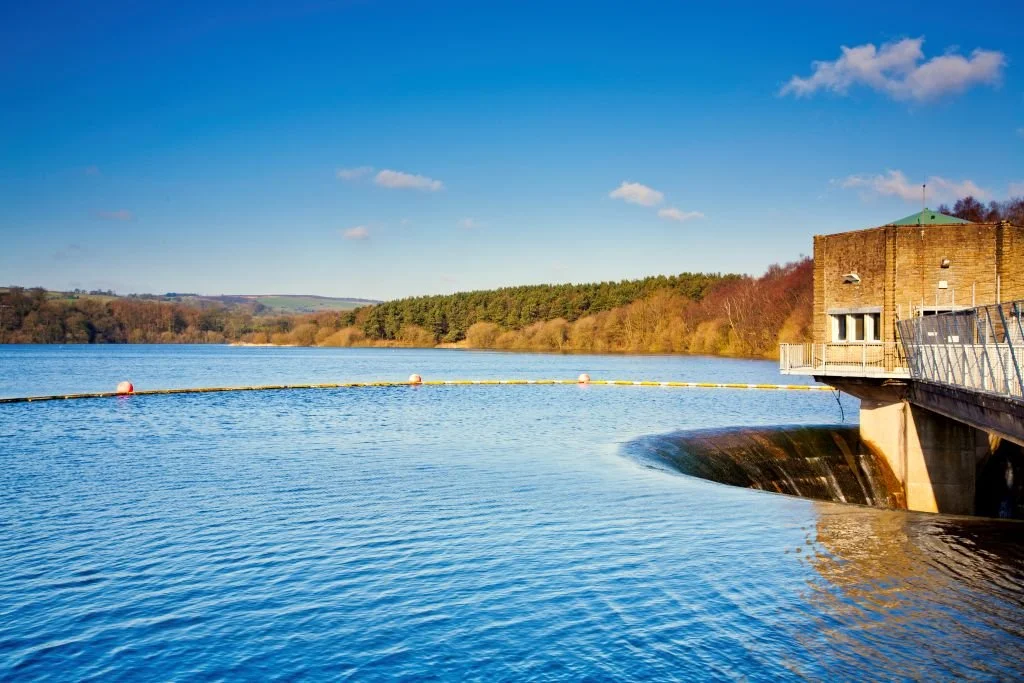
Severn Trent's Tittesworth Reservoir has won The Wildlife Trusts' Biodiversity Benchmark, as new rules require water resource projects to deliver at least 10% biodiversity net gain
Severn Trent has been awarded The Wildlife Trusts' Biodiversity Benchmark for its work at Tittesworth Reservoir in Staffordshire, recognising how it protects and enhances habitats across the site.
The headline success is the willow tit, one of the UK's fastest-declining birds. Its breeding population has fallen by 97% since 1967, to an estimated 3,400 pairs. Severn Trent's rangers have expanded the bird's breeding territories at Tittesworth by managing wet woodland, lowering the canopy and leaving dead wood to create more places to forage and nest. The site is also home to nine species of bat, polecats, hedgehogs and harvest mice, and its grasslands support waxcap fungi.
Severn Trent says it wants to bring the same approach to more of its sites.
The award also comes with a resilience story. Tittesworth supplies an area that was officially in drought this summer, and Severn Trent is building a new 21-mile pipeline from the much larger Carsington Reservoir to help meet future demand. Supply and nature, in other words, are being managed on the same site.
The same thinking is shaping the new reservoirs in the Major Water Infrastructure Programme.
In the Fens, Anglian Water and Cambridge Water's proposed reservoir near Chatteris would include more than 500 hectares of wetland and open space. The RSPB has backed a "wetland first" approach that could make the reservoir a new stepping stone for wildlife between existing wetlands such as the Ouse and Nene Washes.
In Oxfordshire, Thames Water's indicative masterplan for White Horse Reservoir includes lagoons, floating islands, new woodland, a nature education centre and dedicated priority areas for biodiversity, alongside water sports and public access.
In Hampshire, Havant Thicket, now under construction, includes a new wetland and woodland, and a grant scheme to support nature conservation across Hampshire and West Sussex.
The rules have just changed
This is no longer just good practice. Under a Defra biodiversity gain statement published in June, water resources Development Consent Order applications made on or after 2 November 2026 must deliver at least 10% biodiversity net gain. Applicants have to submit an outline biodiversity gain plan with their DCO application. They must maintain the habitat they create for at least 30 years. And the Secretary of State cannot grant consent unless satisfied the 10% objective will be met.
That puts the biodiversity case at the centre of consenting for the strategic water resource schemes still to come forward. It also means habitat creation, monitoring and long-term land management become core parts of the delivery task, not optional extras.
Why it matters for Confluence
Tittesworth shows what a mature reservoir can become. The new schemes will be judged not only on the water they supply but on the places they create, and that is increasingly part of the case for building them at all. Done well, nature-rich reservoirs are one of the strongest answers to the question of public consent we explored in this week's story on Southern Water's recycling campaign.
Confluence is about making the UK's water resilience programme one that society depends on and supports. Reservoirs that are also havens for wildlife are a big part of that story. Join the conversation at Manchester Central on 3 March 2027.
The reservoirs we build now will shape landscapes for a century. They should be worth visiting.