
A new report from the Institution of Civil Engineers and the Future Governance Forum argues that public opposition to infrastructure is less about resisting new projects than about being shut out of decisions. It lands as the water sector's new reservoirs and recycling schemes head into the Development Consent Order process, where winning public trust may matter as much as winning the planning argument.
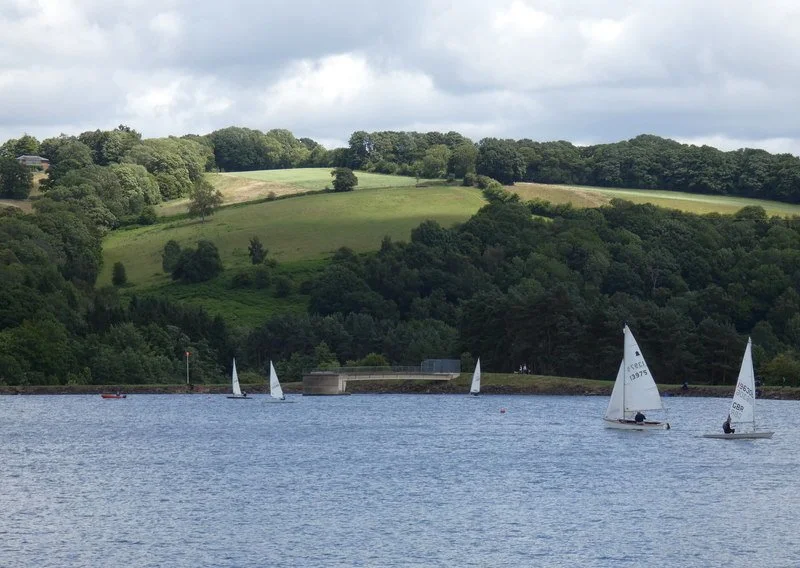
A new ICE and Future Governance Forum report finds 69% of people think their community would benefit from more infrastructure, but 78% don't feel listened to. Image: Sailing boats on Trimpley Reservoir by Mat Fascione, CC BY-SA 2.0, via Wikimedia Commons

The Institution of Civil Engineers (ICE) and the Future Governance Forum have published A Mandate to Build: A new approach to public engagement in infrastructure planning. Its central argument is that government does not have to choose between pace and participation. Done well and early, engagement can make infrastructure faster to consent and deliver, while rebuilding public trust.
The report challenges the idea that Britain is a nation of NIMBYs. It cites Stonehaven polling showing that 69% of people believe their community would benefit from new infrastructure, while 78% do not feel listened to when it is planned, funded and delivered. More than 60% think major projects are poorly communicated.
New polling commissioned for the report, of 1,077 people in October, suggests most people want to shape projects rather than stop them. Respondents were more interested in how a project's impacts are dealt with (60%) and what host communities receive (57%) than in whether it is built at all (44%).
The problem, the authors argue, is that the current system asks for trust at the stage where it is hardest to earn. Under the previous regime, average pre-application time for nationally significant projects nearly doubled, from 14.5 months in 2013 to 27.9 months in 2021, as developers consulted on everything to protect their applications. Yet communities often arrive at consultation wanting to discuss whether or where a project should be built, only to find those questions were settled long before. A Development Consent Order grants legal permission, the report notes, but not public acceptance. As one interviewee put it, problems that are closed off legally tend to resurface politically.
Four recommendations
The report proposes changes at each level of the system:
National strategy. Each refresh of the 10-Year Infrastructure Strategy should be informed by a representative citizens' process commissioned by the National Infrastructure and Service Transformation Authority (NISTA).
A regional tier. Mayors and strategic authorities should run a single public conversation about their region's infrastructure priorities, designed with the bodies preparing sector plans, including the regional water resources groups. Their spatial development strategies should then guide where nationally significant infrastructure goes. Ministers should also be able to delegate consent for "regionally significant" projects, which could include some water resources projects, to established mayors.
Clearer project engagement. The Planning Inspectorate should publish an early, neutral key issues report for each nationally significant project, setting out what is likely to matter to the decision and what is already settled and should not be reopened.
Benefit, not just mitigation. A new Strategic Infrastructure Community Levy, set by a published schedule rather than negotiated project by project, would replace today's patchwork of separate community funds. It would play no part in the consent decision; communities would decide how it is spent.
The polling backs the case for candour. When people were told that construction hours, haulage routes and the community fund had changed in response to consultation, 72% judged the process fair, against 58% when they were told nothing had changed. Being told at the start that the site itself was not open to change made no difference. And 69% said they would be more likely to believe information about a project if it set out the downsides as well as the benefits.
Why it matters for water
The timing is pointed. Over the next year, a run of major water resource projects will go through, or towards, development consent. Southern Water's Hampshire recycling scheme, linked to Havant Thicket, is in examination. Thames Water expects to apply for Teddington DRA in spring 2027. Anglian Water's Fens Reservoir is due to follow early next year, with White Horse and the Lincolnshire Reservoir behind them.
The report is not about water, but it mentions the sector throughout, from the regional water resources groups to some water resources projects being candidates for mayoral consent. And its diagnosis will be familiar to anyone working on these schemes. Most have run several rounds of consultation over several years. The need for them is already established through regional water resources plans and the RAPID process, yet local opposition often still centres on whether they should be built at all.
Three of the report's findings speak directly to the water programme:
Be clear about what is settled. The polling suggests communities do not mind being told the site is fixed. What they want is evidence that the questions genuinely open to them were answered. For schemes whose need is established long before consultation, that is a useful lesson in how to frame engagement.
Engagement rules are changing. The Planning and Infrastructure Act 2025 has removed the statutory requirement for pre-application consultation. That gives promoters more freedom to design engagement around what matters, but less of a script to hide behind.
Benefit, not compensation. The best new reservoirs are being designed as places for recreation and nature, as we reported last week. The report's case for visible local benefit suggests that story belongs at the heart of engagement, not at the end of the consultation document.
Why it matters for Confluence
Confluence exists to help make the UK's water resilience programme one that society not only depends on but supports. The public legitimacy of these projects is not a soft issue. It shapes how long consent takes, how much it costs, and whether schemes can be built at all.
The ICE report gives the sector a framework for thinking about that differently, and its message is one the water industry is well placed to hear: people want resilient water supplies, but they want a say in how they are delivered. It is a conversation we will be having at Confluence, Manchester Central, on 3 March 2027.