
Anglian Water and Cambridge Water are consulting on temporary earthworks trials at the site of the proposed Fens Reservoir, to test how its embankments can best be built before the main works begin. It is a practical step in de-risking one of the UK's largest water resource projects, and a sign of a programme learning the lessons of others.
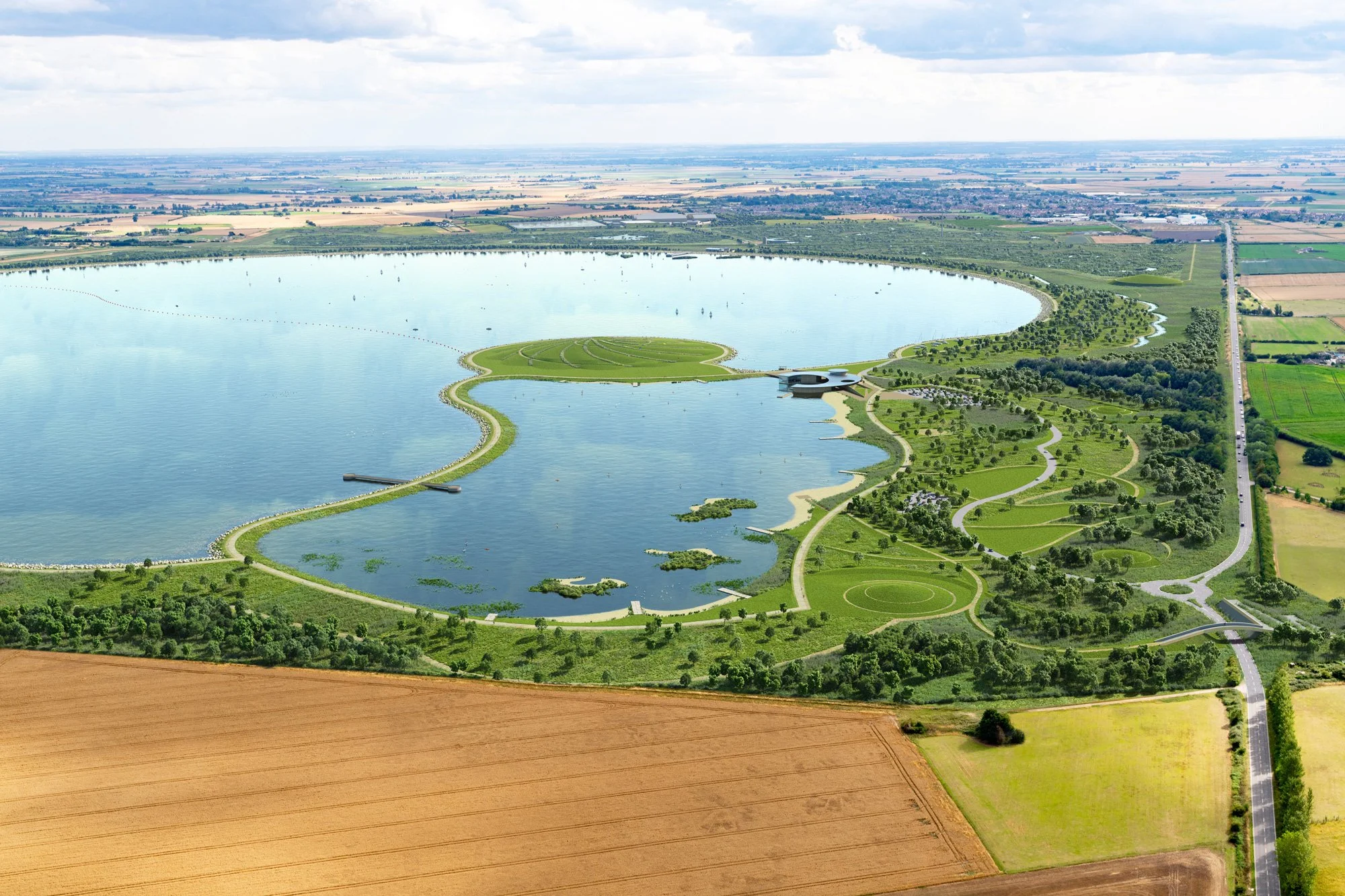
Anglian Water and Cambridge Water are consulting on temporary earthworks trials to test construction methods for the proposed Fens Reservoir.
The two companies launched a public consultation on 18 November on plans for temporary earthworks trials on the reservoir site north of Chatteris in Cambridgeshire. The trials would test, in real conditions, the findings of the engineering modelling and ground investigation carried out so far, including surveys, boreholes and trial pits.
They are designed to answer three practical questions about building the reservoir's embankments:
how the underlying clay should be handled and compacted;
which construction methods work best; and
how quickly the embankments can be built.
The trial works would be temporary and removed once complete. They need their own planning permission from Fenland District Council, separate from the Development Consent Order the reservoir itself will need. If permission is granted, trials could begin in 2027.
Mark Malcolm, reservoirs programme director at Anglian Water, said the trials would give the companies "a unique opportunity to test our plans in real-world conditions".
The consultation runs until 9 December, with a public event at Doddington Village Hall on 25 November. A fourth phase of consultation on the reservoir itself is planned for next year.
The Fens Reservoir would cover around 5km² and hold around 55 million cubic metres of water, supplying around 250,000 homes split between Anglian Water and Cambridge Water. Together with Anglian's proposed Lincolnshire Reservoir, it is part of the response to a projected water shortfall in the East of England, one of the regions most at risk from climate change. The reservoir is expected to be in supply in the mid-2030s.
Why it matters for Confluence
Ground risk is one of the biggest threats to any major earthworks project, and the water sector has had a recent reminder. Earlier this autumn, Ofwat pushed completion of Havant Thicket Reservoir back to 2034, partly because of difficult ground conditions found during construction.
Testing construction methods on site, before the main contract is let, is exactly the kind of early de-risking that gives contractors and investors confidence. Earthworks productivity on a reservoir embankment is not an abstract question: it shapes programme, cost and the size of the workforce needed. Better evidence now means better-priced bids later and fewer surprises during construction.
It also matters for the wider programme. With reservoirs planned in the Fens, Lincolnshire, Oxfordshire and Somerset, what one project learns about clay, compaction and embankment construction could benefit the others, if it is shared. That is the case for treating the reservoirs as a programme rather than a set of individual projects, and it is the conversation Confluence brings together at Manchester Central on 3 March 2027.